Tuesday, December 21, 2010

Mongolia | Zaisan | Eclipse | Nine Nines—Nermel Arkhi Khöldönö

Wandered up to the summit of Zaisan Tolgoi (Noblemen’s Hill) to watch the Moon rise in eclipse on the evening of the 21st. It was minus 8º F when I reached the top. Not surprisingly I was the only person there. 
 The Summit of Zaisan Tolgoi
The War Memorial at the top of Zaisan Tolgoi
The total phase of the eclipse ended at 4:53 pm, just four minutes before the official moon rise time of 4:57. When the moon finally did clear the mountains to the east at about 5:15 it was of normal color and roughly 50% occluded; in other words it resembled a regular half-moon. By 6:05 the shadow on the moon had disappeared completely and it looked like a regular Full Moon.

As you know, each Full Moon has a name associated with it. See North American Names for the Full Moons. The last Full Moon before the Winter Solstice, is known as the Cold Moon, Frost Moon, or Long Nights Moon in English. This is the Full Moon that occurred yesterday. I don’t know if Mongolians have a name for this moon. Maybe Batbold Pandita can help us. 

The Winter Solstice occurred today at 7:38 a.m. (Ulaan Baatar Time), marking the beginning of Winter. In Mongolia the Winter Solstice also marked the beginning of the so-called Nine-Nines: nine periods of nine days each, each period marked by some description of winter weather. The first of the nine nine-Day periods is Nermel Arkhi Khöldönö, the time when normally distilled homemade Mongolian arkhi (vodka) freezes. It was minus 27º F. at 7:38 a.m., cold enough, I think, to freeze Mongolian moonshine, which is not as strong as the store-bought vodka. The next Nine-Day Period starts on December 31. Stayed tuned for updates.

Mongolia | Zaisan | Eclipse | Nine Nines—Nermel Arkhi Khöldönö

Wandered up to the summit of Zaisan Tolgoi (Noblemen’s Hill) to watch the Moon rise in eclipse on the evening of the 21st. It was minus 8º F when I reached the top. Not surprisingly I was the only person there. 
 The Summit of Zaisan Tolgoi
The War Memorial at the top of Zaisan Tolgoi
The total phase of the eclipse ended at 4:53 pm, just four minutes before the official moon rise time of 4:57. When the moon finally did clear the mountains to the east at about 5:15 it was of normal color and roughly 50% occluded; in other words it resembled a regular half-moon. By 6:05 the shadow on the moon had disappeared completely and it looked like a regular Full Moon.


As you know, each Full Moon has a name associated with it. See North American Names for the Full Moons. The last Full Moon before the Winter Solstice, is known as the Cold Moon, Frost Moon, or Long Nights Moon in English. This is the Full Moon that occurred yesterday. I don’t know if Mongolians have a name for this moon. Maybe Batbold Pandita can help us. 


The Winter Solstice occurred today at 7:38 a.m. (Ulaan Baatar Time), marking the beginning of Winter. In Mongolia the Winter Solstice also marked the beginning of the so-called Nine-Nines: nine periods of nine days each, each period marked by some description of winter weather. The first of the nine nine-Day periods is Nermel Arkhi Khöldönö, the time when normally distilled homemade Mongolian arkhi (vodka) freezes. It was minus 27º F. at 7:38 a.m., cold enough, I think, to freeze Mongolian moonshine, which is not as strong as the store-bought vodka. The next Nine-Day Period starts on December 31. Stayed tuned for updates.

Monday, December 20, 2010

Mongolia | Zaisan Tolgoi | Winter Solstice

The Winter Solstice occurs here in Ulaan Baatar at 7:38 AM on the morning of December 22 (also see the 2009 Winter Solstice and 2008 Winter Solstice)December 22 will of course be the shortest day of the year: here in Ulaan Baatar the sun will rise at 8:39 am and set at 5:02 pm for a day of 8 hours, 22 minutes, and 53 seconds. That’s two seconds less the day before and four seconds less than the day after, December 23. The Winter Solstice occurs 6:38 PM on the evening of December 21 in the Eastern United States, on the same day as the Total Lunar Eclipse, which is extremely unusual:
This eclipse is notable because it takes place just hours before the December solstice, which marks the beginning of northern winter and southern summer. The last Dec. 21 total lunar eclipse occurred in the year 1638. (Number-crunchers quibbled for a while over whether that one counted as a solstice eclipse, due to shifts between the Julian and Gregorian calendar, but the current consensus is that It Does Indeed Count. The next winter solstice eclipse is due in 2094.
I am not quite sure where I will go for the Solstice. I may retire to the summit of Öndör Gegeenii Uul, right in front of my hovel in Zaisan Tolgoi, for appropriate ceremonies. Feel free to join me. As usual, I am imploring people not to celebrate the Solstice by engaging in any animal or Human Sacrifices
Summit (left) of Öndör Gegeenii Uul

Mongolia | Zaisan Tolgoi | Winter Solstice

The Winter Solstice occurs here in Ulaan Baatar at 7:38 AM on the morning of December 22 (also see the 2009 Winter Solstice and 2008 Winter Solstice)December 22 will of course be the shortest day of the year: here in Ulaan Baatar the sun will rise at 8:39 am and set at 5:02 pm for a day of 8 hours, 22 minutes, and 53 seconds. That’s two seconds less the day before and four seconds less than the day after, December 23. The Winter Solstice occurs 6:38 PM on the evening of December 21 in the Eastern United States, on the same day as the Total Lunar Eclipse, which is extremely unusual:

This eclipse is notable because it takes place just hours before the December solstice, which marks the beginning of northern winter and southern summer. The last Dec. 21 total lunar eclipse occurred in the year 1638. (Number-crunchers quibbled for a while over whether that one counted as a solstice eclipse, due to shifts between the Julian and Gregorian calendar, but the current consensus is that It Does Indeed Count. The next winter solstice eclipse is due in 2094.
I am not quite sure where I will go for the Solstice. I may retire to the summit of Öndör Gegeenii Uul, right in front of my hovel in Zaisan Tolgoi, for appropriate ceremonies. Feel free to join me. As usual, I am imploring people not to celebrate the Solstice by engaging in any animal or Human Sacrifices
Summit (left) of Öndör Gegeenii Uul

Friday, December 17, 2010

Mongolia | Zaisan | Full Moon | Lunar Eclipse

Unless you have spent the last couple of months indulging in some totally heedless Bacchanalia in a basement bar in Greenwich Village you no doubt know that there is a Total Lunar Eclipse scheduled for December 21, 2010. In the Western Hemisphere the eclipse will fall on the same day as the Winter Solstice; here in Mongolia it will occur the day before. 
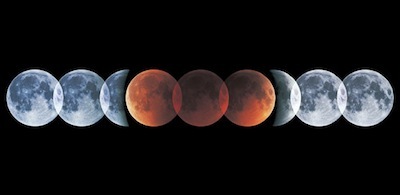
Phases of the Eclipse, with Total in the Middle. For a more detailed view see Lunar Eclipse Phases
Some of the best views of the Lunar Eclipse will be from the east coast of the United States. In Mongolia the situation is complicated to say the least. Here is the schedule (all local Ulaanbaatar times): 

Penumbral begins:  1:29 pm
Partial eclipse begins:  2:33 pm
Total eclipse begins:  3:41 pm
Full Moon at 4:13
Greatest eclipse:  4:17 pm
Total Eclipse ends: 4:53 pm

Moon Rises at 4:57
Sun Sets at 5:01

Partial eclipse ends: 6:01 pm
Penumbral ends: 7:05  pm

As can be seen from this the eclipse begins and the period of total eclipse ends before the moon rises and the sun sets. Thus it will rise during the partial eclipse phase when the sun is still up.  Exactly how the moon will appear when it first rises and then after the sun sets, when it is still in the partial eclipse phase, is unclear. I will be at the summit of Zaisan Tolgoi from 4:00 pm onward on the 21st to find out, however. 

Now there is an additional complication: the forecast for the 21st is snow, with a high temperature of 3º F and a low of minus 27º F. If the skies are clouded over it might not be possible to see the moon at all, regardless of the eclipse phase. 

Eclipses, both solar and lunar, are big events in Mongolia. See the Solar Eclipse of 1997.

Mongolia | Zaisan | Full Moon | Lunar Eclipse

Unless you have spent the last couple of months indulging in some totally heedless Bacchanalia in a basement bar in Greenwich Village you no doubt know that there is a Total Lunar Eclipse scheduled for December 21, 2010. In the Western Hemisphere the eclipse will fall on the same day as the Winter Solstice; here in Mongolia it will occur the day before. 
Phases of the Eclipse, with Total in the Middle. For a more detailed view see Lunar Eclipse Phases
Some of the best views of the Lunar Eclipse will be from the east coast of the United States. In Mongolia the situation is complicated to say the least. Here is the schedule (all local Ulaanbaatar times): 


Penumbral begins:  1:29 pm
Partial eclipse begins:  2:33 pm
Total eclipse begins:  3:41 pm
Full Moon at 4:13
Greatest eclipse:  4:17 pm
Total Eclipse ends: 4:53 pm


Moon Rises at 4:57

Sun Sets at 5:01


Partial eclipse ends: 6:01 pm

Penumbral ends: 7:05  pm


As can be seen from this the eclipse begins and the period of total eclipse ends before the moon rises and the sun sets. Thus it will rise during the partial eclipse phase when the sun is still up.  Exactly how the moon will appear when it first rises and then after the sun sets, when it is still in the partial eclipse phase, is unclear. I will be at the summit of Zaisan Tolgoi from 4:00 pm onward on the 21st to find out, however. 


Now there is an additional complication: the forecast for the 21st is snow, with a high temperature of 3º F and a low of minus 27º F. If the skies are clouded over it might not be possible to see the moon at all, regardless of the eclipse phase. 


Eclipses, both solar and lunar, are big events in Mongolia. See the Solar Eclipse of 1997.

Saturday, November 13, 2010

Mongolia | Gov-Altai Aimag | Camel Trip | Edrin Gov to Tsenkher Gov

The Gobi is the fifth-largest desert in the world, covering roughly 500,000 square miles (1,295,000 square kilometers). While most of the world might think of the Gobi Desert as a single entity, people within Mongolia recognize thirty-three different gobis, or gov, as they are called in Mongolian. These gov are relatively flat areas, covered with sand or gravel of varying sizes, most trending east-west, and separated from each other by ridges of shale, granite, basalt, and other up-thrusting rocks.
On our trip south from Bayan Tooroi we will pass through four govs. Zakhyn Us, where we started, is in the Zakhui Zartyn Gov, a flat area between the main crest of the Gov-Altai Mountains and the Edrin Mountains to the south. Crossing the Edrin Mountains we passed into the Edrin Gov. Much of this is classic zag desert—gravel flats covering with miniature forests of zag (saxaul bushes = Haloxylon ammodendron)
The barren gravel flats of the northern edge of the Edrin Gov with Eej Khaikhan still visible in the distance. 
 Classic Zag Desert in the middle of the Edrin Gov
Ulaan Budargana—Another common plant in the Edrin Gov
Around two in the afternoon we stopped for a tea break. Among my tea supplies I had two disks of Puerh Tea, one of the so-called Ripe or Cooked Puerh and the other Raw or Green Puerh. I am partial to the smoother Ripe Puerh, but on my Last Horse Trip I discovered that the astringently bitter Green Puerh, with the addition of sugar to take away some of the edge, was by no means unwelcome while lounging on our carpets during an afternoon tea break. And thus it proved to be on this camel trip.  I also brought along four ounces of Iron Goddess of Mercy Oolong Tea for the more delicate palates of the ladies. Indeed, I like it too, but I knew from past experience that the camel guys preferred the more robust Puerh. They had also brought some Mongolian brick tea which we would drink for a change of pace, salted as usual. 
Solongo brewing up a pot of ever-welcome Green Puerh tea
After tea we continued on, the camels resuming their usual  slow, stately pace. It is of course possible to trot camels, and fast racing camels can attain prodigious speeds, but camels laden with heavy loads like ours, including 100 liters of water (220 pounds worth) plus food and cooking and sleeping gear, can be trotted only for very short distances if at all. For the long haul they must be walked. In walking mode camels have two speeds: slow, and slower. I have measured their walking speed for hours on end with a GPS and have determined that their slow, or regular, walking mode, when they are relatively well rested, is 4.9 kilometer (3 miles) an hour. People are quick to point out that they can walk faster than that, which is perfectly true.  Humans can easily outpace even a well-rested camel. After four or five eight-to-ten hour days camels tend to tire, and eventually they slip down into a lower gear, covering 4.3 kilometer (2.67 miles) per hour. Now they are practically moving in slow motion, slowly lifting a leg, moving it forward as if through molasses, and then putting the foot down again with great deliberateness. The liberal use of a taishir, the short cane which the camel men use to prod their camels, will speed them back up to their regular pace for short distances, but until they are rested at least overnight they will always will slip back into lower gear if left to their own devices.  
By late afternoon we had reached the gravel flats at the southern edge of the Edrin Gov
A low range of hills separates the Edrin Gov from the Tsenkher Gov
We camped for the night in amidst the sparse zag bushes between the Edrin Gov and the Tsenkher Gov, having covered 34.5 kilometers for the day. The camel men set up one tent for themselves and another for Sister Dulya and Solongo, but as usual in the desert I opted to sleep out under the stars, or as they say in Siberia, “in the Big Tent.” Usually I would throw out my carpets and sleep a hundred feet or so away from the campfire and the tents so that I could fully enjoy the solitude of the desert. Tonight, however, both Sukhee and Brother Duit insisted that I sleep right beside the two tents, since we were still in the area where rabid wolves had been reported. Presumably a rabid wolf would be more inclined to pick off what appeared to be a straggler from the group. I had my doubts that a rabid wolf would be making any such distinctions but did not want to argue with the camel guys.They assured me that tomorrow night we would be out of the danger zone and I could resume what they considered my misanthropic ways.
Between the Edrin Gov and the Tsenkher Gov
One of the great pleasures of traveling in the Gobi is gazing at the night skies. Few places in the world offer a better view of the stars than the Gobi Desert. On most nights there is very little if any any cloud cover, leaving a perfect view of the Heavens from horizon to horizon. There is absolutely no light pollution from towns or cities and the nearest source of any kind of industrial pollution is many hundred of miles away if not more. Also the almost complete absence of humidity in the air means that star light is not refracted by moisture. In today’s world most people have probably never even had a real unimpeded view of the night skies. In many cities no stars at all are visible. Before I left I emailed someone in the United States about this trip and mentioned how clear the skies were in the Gobi. This person asked in reply whether it would be possible to see the Milky Way in the Gobi, implying that the Milky Way was now thought to be some kind of rare phenomenon which most people never saw anymore. In the Gobi the Milky Way (which has the same name in Mongolian [Suun Zam = Milky Road]) is a near solid belt of light arcing across the sky almost horizon to horizon. 

On this trip we would also be treated to a New Moon in three days, which would of course  maximize the star-viewing potential, but even tonight there was quite a show. First out was not a star at all, but the planet Jupiter on the southeast horizon. It would remain for most of the night as the brightest object in the skies. Indeed, much of this month it is the biggest it will appear at any time between 1963 and 2022.  The first star out was twinkling Capella in the northeast, only forty-one light years away, which makes it virtually our neighbor. Actually Capella is two stars revolving so closely around each other that they appear as one. The light we now see from this binary star left it when I was twenty years old, certainly a sobering thought.  One by one the full panoply of constellations popped into view: Big Dipper,  Draco, LIttle Dipper, Cassiopeia, Perseus, Pegasus, and Cynus being the most prominent up until midnight, after which Orion dominated the Heavens. 

Italy | Venice | Early Life of Enrico Dandolo

There are few greater ironies in History than the fact that the fate of Eastern Christendom should have been sealed—and half of Europe conde...