Tuesday, March 5, 2024

Italy | Venice | Early Life of Enrico Dandolo

There are few greater ironies in History than the fact that the fate of Eastern Christendom should have been sealed—and half of Europe condemned to some five hundred years of Muslim rule—by men who fought under the banner of the Cross. Those men were transported, inspired, encouraged, and ultimately led by Enrico Dandolo in the name of the Venetian Republic; and, just as Venice derived the major advantage from the tragedy, so she and her magnificent old doge must accept the responsibility for the havoc that they have wrought on the world. —Byzantium: The Decline and Fall—John Julius Norwich

Venetian Doge Enrico Dandolo (c.1107–1205) was one of the leaders of the Fourth Crusade and the mastermind behind the Sack of Constantinople in 1204. The stated goal of the Fourth Crusade, initiated by Pope Alexander III and launched in 1202, was to recapture the holy city of Jerusalem, which had been seized by the Saladin, the Muslim sultan of Egypt, Syria, Yemen, and Palestine, on October 2, 1187, ending nearly of nearly nine decades of occupation by the Occidental Crusaders. By the time the Crusaders reached Constantinople, however, the Venetian continence, led by Enrico Dandolo, was more concerned with collecting the money they claimed was owned to them by Byzantine Emperor Alexios IV (r. August 1203 to January 1204). Relations between the Venetians and the Byzantines quickly deteriorated and outright war soon broke out. On April 3, 1204, the Crusaders attacked the heavily fortified city. Enrico Dandolo himself, probably ninety-seven years old at the time and almost completely blind, led a contingent of troops to the city’s sea walls. Constantinople fell to the Crusaders on April 13.  Historian Speros Vryonis describes what happened next:


The Latin soldiery subjected the greatest city in Europe to an indescribable sack. For three days they murdered, raped, looted and destroyed on a scale which even the ancient Vandals and Goths would have found unbelievable. Constantinople had become a veritable museum of ancient and Byzantine art, an emporium of such incredible wealth that the Latins were astounded at the riches they found. Though the Venetians had an appreciation for the art which they discovered (they were themselves semi-Byzantines) and saved much of it, the French and others destroyed indiscriminately, halting to refresh themselves with wine, violation of nuns, and murder of Orthodox clerics. The Crusaders vented their hatred for the Greeks most spectacularly in the desecration of the greatest Church in Christendom. They smashed the silver iconostasis, the icons and the holy books of Hagia Sophia, and seated upon the patriarchal throne a whore who sang coarse songs as they drank wine from the Church’s holy vessels . . . The defeat of Byzantium, already in a state of decline, accelerated political degeneration so that the Byzantines eventually became easy prey to the Turks. The Fourth Crusade and the crusading movement generally thus resulted, ultimately, in the victory of Islam, a result which was of course the exact opposite of its original intention.


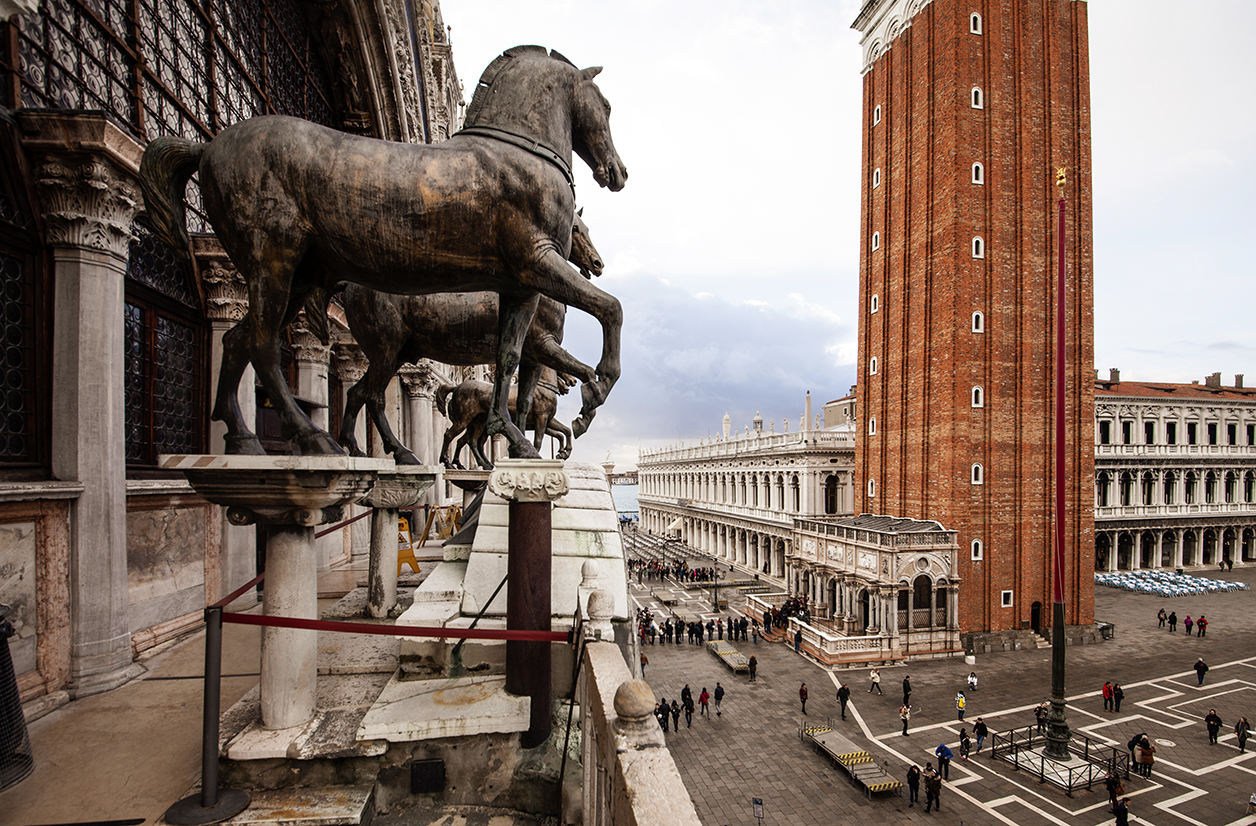
Much of the loot seized by Enrico Dandolo and the Venetians during the sack of Constantinople can still be seen in Venice today, including, perhaps most notably, the Four Horses that once stood in the Hippodrome in Constantinople. They are now in the St. Mark’s Basilica Museum. Reproductions of the Horses grace the facade of the Basilica, mute reminders of Enrico Dandolo’s equivocal role in world history.

Wanders in Venice: The Early Life of Enrico Dandolo, Mastermind of the Fourth Crusade and the 1204 Sack of Constantinople traces the rise of the Dandolo Family to prominence in Venice and the life of Enrico Dandolo up until he was appointed Doge in 1192.


Reproductions of The Four Horses that once stood in the Hippodrome in Constantinople. The originals are now in the St. Mark’s Basilica Museum.

Sunday, January 21, 2024

Mongolia | In Search of Shambhala: The 1925-1928 Roerich Expedition in Ulaanbaatar, Mongolia

The 1925-1928 Roerich Expedition, led by artist, mystic, spy, arch-intriguer, and hard-core Aghartian-Shambhalist Nicholas Roerich, was believed by some to be a khora, or circumnavigation, of the legendary kingdom of Shambhala. The Expedition spent seven months in Ulaanbaatar, the capital of Mongolia. Everywhere they turned the Roerichs stumbled upon signs of Shambhala . . . Continued . . .


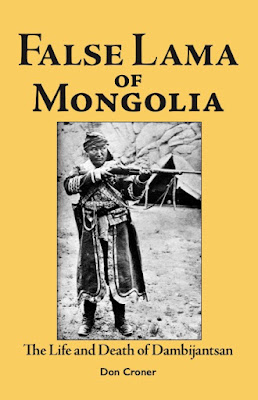
Mongolia | False Lama of Mongolia: The Life and Death of Dambijantsan

Who was Dambijantsan?

A Buddhist monk; a freedom fighter for Mongolian independence; the descendant of Amursanaa (1723–1757), the Western Mongol who led the last great uprising against the Qing Dynasty of China; the incarnation of Mahakala, the Buddhist god of war; bandit, torturer, murderer, or evil incarnate? During his lifetime no one was sure who he really was, and even today the controversy about his life continues.

Born in what is now the Republic of Kalmykia, part of the Russian Federation, Dambijantsen traveled throughout Tibet, India, and China before arriving in Mongolia in 1890 where he tossed gold coins to bystanders and announced to one and all that he had come to free Mongolia from the yoke of the Qing Dynasty of China. After disappearing almost twenty years he returned to lead the attack on Khovd City, the last Chinese outpost in Mongolia. Honored by the Eighth Bogd Gegeen, the theocratic leader of Mongolia, for his efforts in achieving Mongolian independence, he went on to establish his own mini-state in western Mongolia, which he hoped to use as a base for establishing a Mongol-led Buddhist khanate in Inner Asia. His dictatorial nature and unbridled sadism soon came to the fore and he was finally arrested and imprisoned in Russia. After the Russian Revolution he returned to Mongolia, gathered new followers around him, and established a stronghold at the nexus of old caravan routes in Gansu Province, China. He robbed caravans, grew opium, and once again dreamed of creating a new Mongolian khanate in Inner Asia. Finally the new Bolshevik government in Mongolia, fearful of his rising power, issued orders for his assassination. Dambijantsan transmigrated in 1922, but in Mongolia legends persist to this day that his spirit still rides on the winds of the Gobi and continues to haunt his former lairs.


Mongolia | Zanabazar | First Bogd Gegeen of Mongolia


Zanabazar (1635–1723) was, according to most reckonings, the sixteenth incarnation of Javsandamba. The first incarnation is believed to have appeared around the time of the Buddha. As a small boy he was recognized as the spiritual leader of Mongolia and awarded the title of Bogd Gegeen. He would go on to play a role in the religious and political life of Mongolia analogous to that of the Dalai Lamas of Tibet. Zanabazar built temples and established monasteries, including one at what is now the site of Ulaanbaatar, the capital of Mongolia, and was a polymath who invented new scripts for writing the Mongolian language, designed new clothes for monks, studied the medical properties of hot springs, and much else. He is most famous for his bronze statues which are now the centerpieces of three museums in Ulaanbaatar. “During his lifetime, he was the greatest Buddhist sculptor in Asia,” opines art historian K. Youso about Zanabazar.” Indeed, he is often called the Michelangelo of Mongolia. Zanabazar was the first of Mongolia’s nine Bogd Gegeens. The Ninth Bogd Gegeen transmigrated on March 1, 2012.  During a visit to Mongolia on November 23, 2016, the Fourteenth Dalai Lama announced that the Tenth Bogd Gegeen had been born and that attempts were being made to identify him. Update: The Tenth has now been named. See Tenth Incarnation.


See The Life of Zanabazar

Tuesday, January 9, 2024

Mongolia | Wanders in the Khentii Mountains of Mongolia | Burkhan Khaldun Khora

Eight thousand and forty-foot-high Burkhan Khaldun in the Khentii Mountains is one of the most sacred mountains in Mongolia. It is mentioned several times in the Secret History of the Mongols, a thirteenth-century account of the rise of the Mongols under Chingis Khan, and it was here, many believe, that Temüjin—the future Chingis Khan—hid from the Merkit tribesmen who had kidnapped his wife and wanted to capture him. According to legend, he also came here to pray before embarking on his military campaigns. Chingis Khan instructed his descendants to worship the mountain: “Every morning I shall sacrifice to Burkhan Khaldun, and every day I will pray to it. The seed of my seed shall know this,” he said, according to the Secret History. Eventually the mountain would be inextricably bound up in the cult of Chingis Khan and also become a pilgrimage site for Buddhists. Still later some would claim that Chingis Khan was born near Burkhan Khaldun and was buried on its summit . . . Continued . .  .

Monday, January 8, 2024

Mongolia | Wanders in the Khentii Mountains of Mongolia | Onon Hot Springs

I have visited the Onon Hot Springs in the upper Onon Valley three times: once while on my first trip into the Khentiis in 1997; once while doing the Khora around the Burkhan Khamag of the Khamag Mongols; and yet again in 2007, when I made a trip to the springs for therapeutic purposes. The springs are famous for treating diseases and afflictions of the lower body: knees (mud packs taken from near the springs are especially good for knee joints), lower back pain, kidney and liver problems, and rheumatism and sore muscles in general. Zevgee wanted to treat his knees, which had become wobbly with the advancing years, I am concerned about my lower back, which had been acting up for the past several years. Zevgee’s wife, Tümen-Ölzii, had no specific ailments but just wanted to enjoy the rejuvenating effects of the springs. Zevgee’s son Batdorj and grandson Puntog would come along on a break from the daily chores of herding livestock and to help Zevgee with the horses.

Puntog, Zevgee, Batdorj, Tümen-Ölzii (click on photos for enlargements)

From Zevgee’s ger at the confluence of the Kherlen Gol and Terelj Gol we took the by-now familiar trail up the east bank of the Kherlen, past Erdene Uul, the Burkhan Khaldun of the Uriangkhai, to the Shirengetei Gol, and then rode up Shirengetei Valley. At places a two-rutted path could just be made out. According to Tümen-Ölzii, locals called this path Zanabazar’s Road. Zanabazar, the First Bogd Gegeen, had, it was claimed, visited the Onon Hot Springs on an almost yearly basis. He probably came here from Saridag Khiid, the monastery that I had visited earlier. From Saridag Khiid he would have taken a small tributary of the Tuul Gol to Bürkhiin Davaa and then down the valley of the Bürkh Gol to the Kherlen Gol—the same route I had taken when I visited Saridag Khiid—and then followed the Shirengetei Gol upstream on the path that now bears his name. 
Zanabazar’s Road (foreground), and the Shirengetei Gol Valley

We camped for the night in the upper Shirengetei Valley and the next day crossed Baga Davaa and Ikh Davaa into the drainage of the Onon Gol. We stopped that night in the valley of the Tsonj Chuluu Creek at the same clearing we had camped at on my previous two trips to Onon Hot Springs. The next day we continued on to the Onon Gol, just below its beginning at the confluence of Tsonj Chuluu Creek and Öngöljin Creek. On my previous two trips we had proceeded down the east bank of the Onon Gol. There was a trail of sorts but at times we had to ride through swamps and standing water. Twice my horse floundered in knee-deep mud. Since then hunters had told Zevgee that there was a better trail down the west bank of the river. Crossing the Onon Gol we soon picked up the faint trail. The terrain on the west bank was elevated and dry and the forest was relatively free of down timber. At places there was just a hint of a two-rutted path. This, Zevgee concluded, must be the route used by Zanabazar. Although at times the trail meandered a half mile or more from the river it was easy going and we arrived at the hot springs by late afternoon . . . Continued


Thursday, January 4, 2024

Mongolia | Wanders in the Khentii Mountains of Mongolia | The Source of the Amur River and the Birthplace of the Mongols

The Amur River is, according to most sources, the tenth-longest river in the world. The Amur flows into the Strait of Tartary, which separates Sakhalin Island from mainland Asia. The Strait of Tartary opens to the north into the Sea of Okhotsk, part of the Pacific Ocean. The Amur River proper begins at the confluence of the Shilka and Argun rivers and flows 1755 miles to the sea. The 348-mile-long Shilka River begins at the confluence of the Ingoda and Onon rivers. The Onon, the larger of the two and thus considered the ultimate source of the Amur River System, measures 641 miles in length. Thus the entire Onon-Shilka-Amur River System is 2,744 miles long. Some reference works maintain, however, that the ultimate source of the Amur River System is the Kherlen River, which flows east out of the Khentii Mountains and eventually debouches into Khölön Lake (also known as Dalai Nuur) in the Chinese province of Inner Mongolia. Normally it is an endorheic lake with no outlet, however, and only at times of high water does Khölön Lake overflow into the Argun (Ergüne) River, which flows northeast and eventually combines with the Shilka River to form the Amur River. The fact that the Kherlen-Khölön Lake-Argun-Amur River System does not flow continuously seems to disqualify it in the eyes of most authorities, including the Times Altas of the World (wikipedia.com names the Onon as the source of the river system, with the Argun-Kherlen as a “2nd source”). 


 During my first trip into the Khentii Mountains in 1997 I crossed Ikh Davaa, which separates the drainages of the Kherlen Gol and the Onon Gol, and then followed Tsonj Chuluu Creek downstream to its confluence with Öngöljin Creek. This is the actual beginning of the Onon River. Öngöljin Creek is the bigger of the two creeks that combine to form the Onon. Therefore the true, ultimate source of the Onon-Shilka-Amur River System is the source of Öngöljin Creek, a detail left out of all atlases and other authorities. On that first trip into the Khentiis I was hell-bent on visiting Onon Hot Springs and ascending the sacred mountain of Burkhan Khaldun (Khentii Khan Uul), so I did not trace Öngöljin Creek to its beginning. I did decide that one day I would return and locate the source of Öngöljin Creek, the true beginning of the Öngöljin Creek–Onon–Shilka-Amur River System. My original plan was to retrace my 1997 route to the beginning of the Onon Gol and then proceed upstream on Öngöljin Creek . . . Continued.


Mongolia | Wanders in the Khentii Mountains of Mongolia | Saridag Khiid and Yestiin Hot Springs

While browsing in a bookstore in Ulaanbaatar I came across a short biography of Zanabazar (1635-1723), the First Bogd Gegeen of Mongolia, written by a Mongolian historian. Nowadays Zanabazar is perhaps best known for his artwork. I had already seen examples of his famous bronze statues in the Zanabazar Fine Arts Museum, the Choijin Lama Museum, and the Bogd Khan Winter Palace Museum, but at that point I knew very little about his life. Zanabazar was a polymath who addition to being an artist had designed and built new temples, invented two new scripts for writing the Mongolian language, and fashioned new clothes for monks. He also studied the medical properties of hot springs. According to the author of the biography, these included the Onon Hot Springs, which I had visited on my first trip into the Khentii Mountains, the Minj Hot Springs on the Minj Gol in the northern Khentiis, and Yestiin Hot Springs. The author made no mention of where the Yestiin Hot Springs were located, but I assumed they were somewhere in the Khentii Mountains, where Zanabazar had established a large monastery. The first opportunity I had I asked Zevgee, the Kherlen Valley herdsman who had acted as my guide on my previous trips into the Khentiis, if he knew anything about Yestiin Hot Springs. Of course he knew. He said he had been there numerous times. The hot springs were about a three-day ride by horse from his ger near the confluence of the Kherlen Gol and the Terelj Gol. Thus a couple of years after my first trip into the Khentiis I made arrangements to visit Yestiin Hot Springs.

While on the way to Yestiin Hot Springs I stumbled upon the ruins of Saridag Khiid, the monastery founded by Zanabazar in 1654. The monastery was totally destroyed by Zanabazar’s arch-nemesis Galdan Bolshigt in 1688, and for over 300 years the ruins, in a remote area of the Khentii Mountains, were visited only by hunters and plant-gatherers . . .  Continued.

Monday, December 18, 2023

Iran | Tabriz | Covered Bazaar | Tea

Wandered by Tabriz, a city of some 1.7 million souls—the fifth largest city in Iran. In 1655 the legendary Turkish gadabout Evliya Çelebi ((1611–1682; his mammoth Book of Travels—ten volumes, only eight have survived—is what his translator calls “probably the longest and most ambitious travel account by any writer in any language.”) spent two months in Tabriz and observed:

. . . in the entire kingdom of Persia there is no city and no countryside as fine as Tabriz, the ravisher of hearts . . . It is a large and ancient city with delightful climate, lovely boys and girls, lofty buildings and numerous foundations and institutions. May God allow that it will once again belong to the Ottomans [the Ottoman Turks had occupied Tabriz from 1585 to 1603] . . . may God Most High cause it to flourish forever!

Hotel in Tabriz where I stayed (click on photos for enlargements)

View of Tabriz from my hotel room

While in the city I visited the famous Tabriz Bazaar, said to be the largest covered bazaar in the world. It covers 66.7 acres, with 3.41 miles of passageways and 5500 shops. The Grand Bazaar of Istanbul, while ranking as the biggest single tourist attraction in the world, with over 91,000,000 visitors a year, has between three and four thousand shops. The largest mall in the United States, the Mall of America in Bloomington, Minnesota covers more space than the Tabriz Bazaar—96.4 acres total with 56.8 acres devoted to 530-some shops—but many would argue that it is not a covered bazaar in the classic sense of the term but rather a New World mutation.

Gallery in the Tabriz Bazaar

Of course I gravitated to the tea shops. Here tea is sold by the kilo out of big wooden bins, as God intended, not in ridiculous little tea bags.

Tea for sale in the Tabriz Bazaar


 Green tea (Chai Sabz) grown in Lahijan, a city in Gilan Province in northern Iran, just south of the Caspian Sea). The sign indicates that this tea is Chin Bahara (spring pick). I like that they say when the tea is picked. Freshness is crucial with green tea.

Sunday, December 17, 2023

Italy | Venice | Palazzo Rizzi


Wandered by Venice and am back in my usual digs, an old nunnery which has been converted into a hotel. The building, once the Palazzo Rizzi, is located on the Fondamenta Rizzi, about a five minute walk from the Piazzale Roma, where all buses from the mainland terminate. The hotel is still owned and operated by St. Joseph’s Daughters of Caburlotto, the religious order that occupied the nunnery. As befitting an old nunnery, the rooms are tiny and spartan, to say the least. My bed is about three feet wide—all that was needed by a nun—and my ankles hang over the end, but the room does have a desk and enough electrical outlets to keep all my devices topped up. What else does one need in a room? There is also a midnight to 6:00 a.m. curfew. You cannot enter or leave the building during those hours. This is of no importance to me. Venice is not a night-life city by any stretch of imagination, and I myself would never have any reason to stay out past midnight. The Fondamenta Rizzi, the walkway on which the hotel is located, does not even have a convenience store and is as quiet as Ligeia’s tomb after nine p.m. 

Fondamenta Rizzi on the right (click on photos for enlargements)
The old Palazzo Rizzi, later a nunnery and now a hotel
Venice
Venice. The leaning bell tower is not a photographic distortion. It actually does lean that way.
Canal of San Luca
The Piazzetta in Venice
Piazza and Church of San Marco
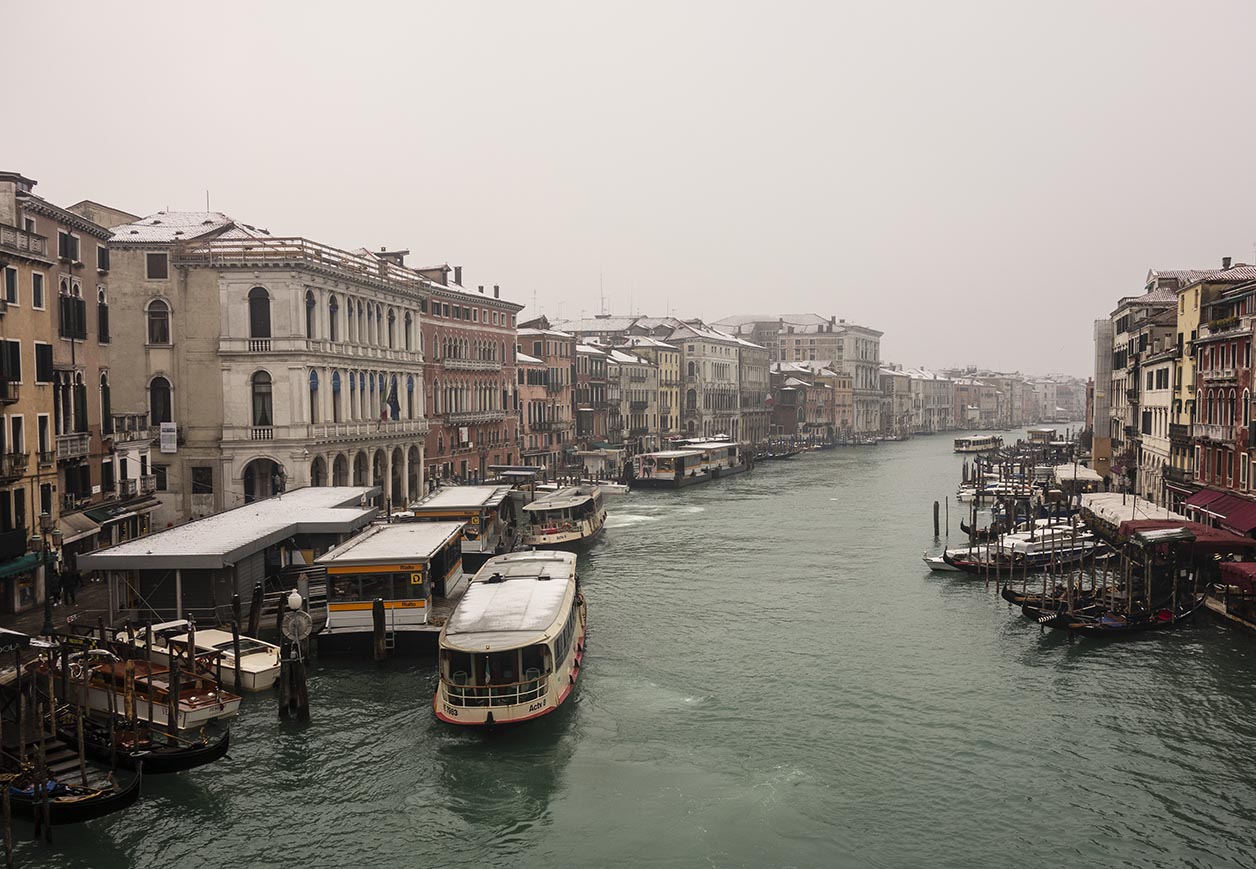
Grand Canal from the Rialto Bridge

Friday, December 8, 2023

Mongolia | Ulaanbaatar | Soyolma

New painting by Mongolian artist Soyolma (click on photos for enlargements).

Soyolma in her studio. The painting  behind her is now in my Zaisan Tolgoi Galleria.

Soyolma’s painting in my Galleria

Soyolma is also a thangka painter. Here is a White Tara thangka she painted for me. 
Now in my Galleria. 

Wednesday, November 29, 2023

Iran | Yazd

Wandered by Yazd, a city of about one million people located near the middle of Iran. It is known as one of the hottest cities in the country. As with many cities in the desert water is held in high regard. 
 Main square of Yazd (click on photos for enlargements)
 Main square of Yazd
 Main square of Yazd
Kids playing in the main square of Yazd. The city’s famous wind-catchers, which catch cool breezes and funnel them down into the buildings below, can be seen in the background. The wind-catchers were an early form of air-conditioning. 
 Skyline of Yazd with more wind-catchers
Wind-Catchers
Streets of Yazd
 Mosque in Yazd
 Detail of mosque in Yazd
  Detail of mosque in Yazd
 Hotel where I stayed in Yazd
 Courtyard of hotel where I stayed in Yazd
  Courtyard of hotel where I stayed in Yazd
Courtyard of hotel where I stayed in Yazd. The perfect place for sipping a saffron tisane as the air cools off at twilight. 

Saturday, September 2, 2023

Uzbekistan | Bukhara | Bakharzi | Bayan Quli | Sorqaqtani


Wandered out to the Fathabad district, about two miles east of the old historical core of Bukhara, to visit the mausoleum of Saif ed-Din al-Bakharzi. The mausoleum complex is now in a nicely laid out park surrounded by four-lane highways and Soviet-era apartments blocks. Bakharzi was born in Khorasan (now northeastern Iran) and studied religion in Nishapur and Herat before moving to Gurganj (now Konye Urgench in Turkmenistan). Gurganj was the capital of Khwarezm, the land on either side of the lower Amu Darya River, including the broad delta estuary of the river on the southern edge of the Aral Sea. By the beginning of the thirteenth century Khwarezm had become the core province of the Khwarezmian Empire, which under the leadership of Muhammad Khwarezmshah (r. 1200-1220) included a huge swatch of Asia from the Caspian Sea to the Indus River. Bakharzi had early on shown an inclination toward mysticism, and he may have been attracted to Gurganj by the presence of Nadjm ed-Din Kubra, who would eventually be recognized as one of the thirteen century’s great mystics. In any case, he became a disciple of Kubra, apparently while still a teenager. 

Nadjm ed-Din Kubra was born in Gurganj in 1145, the son of fabric merchants who studied religion on the side. As a child he experienced what he called the “loosening of the bonds of the intellect,” apparently mystical experiences during which he was temporary removed from the strictures of consensual reality. Reining in these impulses, he devoted himself to the conventional study of hadith (sayings of the Prophet Mohammad), seeking out teachers in Nishapur in Khorasan, Hamadan and Isfahan in Iraq-i Ajam (northwest Iran), Mecca, and finally Alexandria in Egypt. From Alexandria he drifted on down to Cairo, where he fell under the sway of a Sufi teacher by the name of Ruzhedan. Under Ruzhedan’s supervision Kubra did several forty-day retreats and engaged in other Sufi practices. Ruzhedan was so impressed by Kubra’s progress along the Sufi path that he gave him one of his daughters in marriage. Kubra went on to study with a succession of Sufi teachers in Cairo and in Dezful, in Iraq-i Ajam. While in Dezful one of his teachers, Esmail il-Qaṣri, declared that Kubra was qualified to become a teacher himself. He returned to Cairo to get the blessing of Ruzhedan and then made the long journey back to Khwarezm, arriving in Gurganj in 1184. In Gurganj Kubra eventually gathered around him a group of some sixty students, including an inner circle of twelve particularly gifted devotees. Because of his teaching abilities, his followers gave him the nickname Shayk-e walitaras, the “saint manufacturing saint.” Bakharzi was apparently one of Kubra’s sixty students—whether he was in the inner circle or not is unclear—and it was later said that he was one the saints who Kubra “manufactured.” 

In 1219 Chingis Khan invaded the land of the Khwarezmshahs. Otrar, Bukhara, Samarkand, Termez, and other cities in Mawarannahr (Transoxiania) quickly fell to the Mongols. In the fall of 1220 Chingis ordered his two sons Chagaadai and Ögödei to invade Khwarezm and take the capital of Gurganj. Word of the holy man in Gurganj had Chingis Khan himself. According to one near contemporary account, Chingis Khan:
had heard of the Shaykh of Shaykhs and the Polestar of Saints [Kubra], and knew somewhat of his character [and] he sent him a message that he intended to sack Khwarazm [Gurganj] and massacre its inhabitant, and that one who was the greatest man of his age should come out from it and join him, now that the moment had arrived for the incidence of the catastrophe. “That I should come forth from amongst them,” replied the Shayk, “would be an action remote from the way of virtue and magnanimity.
The historian Nur ad-Din Abd ar-Rahman Jamī (1414 –1492) tells what happened next:
When the Tartar heathen [Mongols] reached Khwarazm, the Shaykh (Kubra] assembled his disciples, whose number exceeded sixty . . . The Shaykh summoned certain of his disciples . . . and said, “Arise quickly and depart to your own countries, for a fire is kindled from the East which consumes nearly to the West. This is a grievous mischief, the like of which hath never heretofore happened to this people (the Muslims)”. Some of his disciples said, “How would it be if your Holiness were to pray, that perhaps this [catastrophe] may be averted from the lands of Islam?' “Nay,” replied the Shaykh, “this is a thing irrevocably predetermined which prayer cannot avert.” Then his disciples besought him, saying, “The beasts are ready prepared for the journey: if your Holiness also would join us and depart into Khunlsan, it would not be amiss.” “Nay,” replied the Shaykh; “’here shall I die a martyr, for it is not permitted to me to go forth.“ So his disciples departed into Khurasan . . . When the heathen entered the city, the Shaykh called such of his disciples as remained, and said, “Arise in God's Name and let us fight in God's Cause.” Then he entered his house, put on his Khirga (dervish robe), girded up his loins, filled the upper part of his Khirga, which was open in front, with stones on both sides, took a spear in his hand, and came forth. And when he came face to face with the heathen, he continued to cast stones at them till he had no stones left. The heathen fired volleys of arrows at him, and an arrow pierced his breast. He. plucked it out and cast it away, therewith passed away his spirit. They say that at the moment of his martyrdom he had grasped the pigtail of one of the heathen, which after his death could not be removed from his hand, until at last they were obliged to cut it off.
Later a mausoleum in his name was built on the outskirts of Gurganj. It can still be seen there today, but whether or not his body is actually in it remains a matter of conjecture. 

Bakharzi was one of the students of Kubra who escaped from Gurganj before the Mongols sacked the city. He settled in the outskirts of Bukhara, which itself had been sacked by the Mongols a year earlier and quickly attracted students of his own. They became the Bukhara core of the Sufi sect known as the Kubrawiya—followers of the teachings of Kubra. Eventually a complex of dwellings, meeting places, and schools for members of the Kubrawiya grew up the Fathabad district. Word of the illustrious Sufi teacher in Bukhara eventually spread far and wide. Berke Khan, the son of Jochi, Chingis Khan’s oldest son, and the Khan of the Golden Horde from 1257 to 1266, heard of Bakharzi and travelled to Bukhara to met him. The record is unclear, but Bakharzi may have been instrumental in the conversion to Islam of Berke Khan, the first important Mongol to do so.

Word of Bakharzi also reached Sorqaqtani, arguably the most influential woman in the Mongol Empire in the mid-thirteenth century. Sorqaqtani was daughter of Jakha Gambhu, the younger of brother Tooril (a.k.a. Tughrul, Wang Khan, Ong Khan, etc), ruler of the Keraits, a powerful tribe in Mongolia around the time of Chingis’s Khan’s rise to power. Tooril was the blood brother of Chingis Khan’s father Yesükhei and later Chingis’s own patron and ally. Tooril’s headquarters were in the Tuul River valley, near the site of current-day Ulaanbaatar. Later Marco Polo would retail the story that Tooril was the legendary Prester John, the Christian king who would come to the aid of European Crusaders in the Mideast by attacked Muslims from the rear, as it were. Tooril in all likelihood had never heard of the Crusaders and its doubtful if he had any interest in politics outside of the Mongolian Plateau. HIs name may have became connected with the Prester John legend because many of the Keraits, and possible Tooril himself, were Nestorian Christians. This branch of Christianity, declared heretical by the Council of Ephesus in 431 a.d., migrated eastward to escape persecution and eventually become known as the Church of the East. Following the great trade routes east, Nestorian Christianity reached Xian, the main eastern terminus of Silk Road, no later than the 780s. It eventually spread northward across the Gobi Desert and onto the Mongolian Plateau, where it found adherents among the Keraits and other tribes. It was not clear if Jakha Gambhu was a Nestorian Christian, but his daughter Sorqaqtani most definitely was. 

Around 1203 Tooril, afraid of Chingis Khan’s rising power among the tribes of the Mongolian Plateau, plotted to have him assassinated. The plot failed, and in retaliation Chingis Khan annihilated the Kerait nation. Jakha Gambhu attempted, however, to stay on Chingis’s good side, and to cement their relationship he offered up three of his daughters as peace offerings. The oldest of them was married to Chingis himself (he later gave her away to one of his favorite generals); the middle daughter was married to Jochi, Chingis’s oldest son; and the youngest, Sorqaqtani, was wed to Tolui, Chingis’s youngest son, while she was still a teenager. 

Tolui and Sorqaqtani went on to have four sons: Möngke, Khubilai, Khülegü and Ariq Böke, Tolui died relatively young, at the age of 40, in 1232. According to the Persian historian Ata Malik Juvaini, he became a victim of his own successes: “the world his thrall and the heavens subservient to his wishes, he became excessively addicted to the circulating of cups of wine from morn till eve, and a malady over took him such that two or three days did not pass before he died.” Juvaini was the hired pen of Khülegü, Tolui’s son, so it seems unlikely he would so relate such an unflattering story if there was not some truth to it. Chingis’s third son, Ögödei, offered to marry the newly widowed Sorqaqtani, but she refused. She also turned down an offer to marry his son, Güyûk, explaining that she needed all of her energies to raise and educate her sons. Thus began two decades of maneuvering which eventually made at least three of her sons rulers of immense khanates. According to Juvaini, 
. . . in the management and education of all her sons, in the administration of affairs of state, in the maintenance of dignity and prestige and in the execution of business, Beki [Sorqaqtani], by the nicety of her judgement and discrimination, constructed such a basis and for the strengthening of these edifices laid such a foundation that no turban-wearer [men, in general] would have been capable of the like or could have dealt with these matters with the like brilliance. 
Even the spurned Ögödei listened to her counsel and bowed to her wisdom in matters of state: 
In any business which [Ögödei] undertook, whether with regard to the weal of the Empire or the disposal of the army, he used first to consult and confer with her and would suffer no change or alteration of whatever she recommended. The ambassadors . . . too held her in great honour and respect; and the dependents and subjects of her Court in nearest and farthest East and West were distinguished from those of all the other princes by the dignity and protection they enjoyed, and because of her zealous concern for each of them individually their lives were contented and carefree.
Ögödei’s eldest son Güyük had been named Great Khan of the Mongols in 1246. He transmigrated in 1248, and for three years his widow Oghul Qaimish ruled as regent. Sorqaqtani had been busy behind the scenes, however. According to Juvaini, after her husband Tolui had died,
 . . she had won favor on all sides by the bestowing of gifts and presents upon her family and kindred and dispensing largesse to troops and strangers and so rendered all subject to her will and planted love and affection in everyone's heart and soul, so that when the death of Güyük Khan occurred most men were agreed and of one mind as to the entrusting of the keys of the Khanate to her son Möngke Khan. For the report of her wisdom and prudence and the fame of her counsel and sagacity had spread to all parts, and none would gainsay her word. Furthermore, in the management of her household and in the ceremonial of her court she laid for kinsmen and stranger such a foundation as the khans of the world had not been capable of.
Sorqaqtani’s politicking succeeded, and she lived to see her first son Möngke Khan named Great Khan in 1251. Her second son Khülegü would overthrew the Abbasid Caliphate in Baghdad in 1256 and found the Ilkhanate in what is now Iran, Iraq, and parts of Armenia, Georgia, and Turkey. Her third son Khubilai ruled as Great Khan of the Mongols from 1260 to 1294 and founded of the Yuan Dynasty in China. For a brief time in the early 1260s Ariq Böke, her fourth son, claimed the title of Great Khan, but he was eventually overthrown by his brother Khubilai. Such was Sorqaqtani’s legacy to world history. 

Although she remained a Nestorian Christian to the end of her life, Sorqaqtani, like many of the Mongolian ruling class, was remarkably ecumenical when it came to religious matters. According to Juvaini: 
 . . . her hand was ever open in munificence and benefaction, and although she was a follower and devotee of the religion of Jesus she would bestow alms and presents upon imams and shaikhs and strove also to revive the sacred observances of the faith of Mohammed (may God bless him and give him peace!). And the token and proof of this statement is that she gave 1000 silver balish that a college (madrasa) might be built in Bukhara, of which pious foundation the Shaik-al-Islam Saif-ad-Din of Bakharz should be administrator and superintendent; and she commanded that villages should be bought, an endowment made and teachers and students accommodated [in the college]. And always she would send alms to all parts to be distributed among the poor and needy of the Moslems; and so she continued until . . . the year 649 [February-March, 1252], when the Destroyer of Delights sounded the note of departure.
Bakharzi became the mudabbir (principal) of the madras and mutavalli (administrator) of the endowment set up by Sorqaqtani, and under his leadership the Sufi complex continued to grow until he transmigrated in 1261. HIs son Abu al-Muzaffar Ahmad succeeded him as leader of the Kubrawiya in Bukhara. Around this time the region was thrown into upheaval by the internecine wars between various feuding Mongol factions and as a result very little is known about the fate of the Kubrawiya in Bukhara for the next forty or so years. 

Abu al-Muzaffar Ahmad died in 1312 or 1313 and was replaced by Barkhazi’s grandson Abu al- Mafakhir Shaykh Yahya. Under his leadership the Kubrawiya again flourished. He had over the years managed to became quite wealthy, and he used his money to purchase eleven agricultural villages. A portion of the income from these villages he placed in an endowment which was to provide for the upkeep of the Kubrawiya complex, including a mausoleum for the remains of his grandfather Barkharzi. Three copies for the deed of endowment, signed on August 1, 1326, can still be found in Uzbeg archives. Presumably Sorqaqtani’s endowment was also still contributing to the upkeep of the complex. 

Seven years later, in 1333, legendary Moroccan traveler Ibn Battuta (1304–1368-69), who spent almost thirty years traveling around the Islamic world, arrived in Bukhara. At the time, according to Ibn Battuta, the city was still feeling the effects of the Mongol irruption: “This city had once been the capital of the cities lying across the Jaihun River [Amu Darya], but the cursed Tatar Tinghiz [Chingis Khan] . . . destroyed it so that all of its mosques, madrassahs and market-places lay in ruins, with a few exceptions.” Ibn Battuta was wrong to blame Chingis Khan himself for the desolation he saw. Chingis had sacked the city 113 years earlier, and according to most sources, including Juvaini, Bukhara had rebounded in the aftermath. The desolation which Ibn Battuta claims to have seen was the result of the vicious infighting between the various contestants for control of the Chagaadai Khanate. 

The one exception to the gloomy picture of Bukhara painted by Ibn Battuta was the Kubrawiya complex. According to Ibn Battuta:
We alighted in a suburb (rabat) of Bukhara known as Fathabad, where there is the tomb (qahr) of the learned, devout, ascetic shavkh Sayf al-Din Bakharzi, one of the great saints . . . This lodge is connected with the shaykh; it is immense, and has vast endowments from which travellers are fed. Its superior, Yahya al-Bakharzi, is one of his descendants. He entertained me in his home, and invited the prominent men of the city [Bukhara] for the occasion. The Koran-readers recited with beautiful modulations, the preacher delivered a sermon, and they sang melodiously in Turki and Persian . . . We passed there a wonderful night.
In 1358 the mausoleum of the Mongol ruler Bayan Quli was added to the complex. He had reigned as the nominal khan of the Chagaadai Khanate, to which Bukhara belonged, from 1348 to 1258, when he was assassinated by a rival. It is not clear if he himself belonged to the Kubrawiya sect, but he apparently was inspired by the spiritual legacy of Barkhazi and wanted to be entombed near Barkhazi’s own mausoleum. The mausoleum of Bayan Quli still stands, heavily restored, next to the mausoleum of Barkhazi.

The original mausoleum of Barkhazi seen by Ibn Battuta was later replaced with the mausoleum which now stands on the site. Historical data on the current mausoleum is lacking. The caretaker of the mausoleum and various ephemeral sources—tourist guides to the city, brochures, etc.—indicate only that it was built in the latter part of the fourteenth century. The generally accepted date for the end of Chagaadayid rule in the region and the beginning of the reign of Amir Timur—Tamerlane—is 1370. Thus it is not clear if the mausoleum was built during  the Chagaadayid or Timurid eras. If it was built in Timurid times then the mausoleum of Bayan Quli, built in 1358, may be the only remaining Chagaadayid—Mongol—monument in the city of Bukhara. It is indicative of those turbulent times that the mausoleum contains the body of a Mongol killed by another Mongol.


The Mausoleum of Bakharzi, dating to the latter part of the fourteenth century. The mausoleum of Bayan Quli can be seen in the background to the right (click on photos for enlargements).


The tomb of Bakharzi. According to the caretaker the skull of Bakharzi was removed from the tomb, in 1940 he believes, and taken to Moscow for study. It was later returned and is now in the tomb with the rest of the body.


The Mausoleum of the Mongol khan Bayan Quli. This may be the only Mongol-era monument remaining in Bukhara.

Italy | Venice | Early Life of Enrico Dandolo

There are few greater ironies in History than the fact that the fate of Eastern Christendom should have been sealed—and half of Europe conde...